Making Informed Decisions: My Recommendations for using EquiHealth
When I set out to create EquiHealth App, I had the overarching goal of helping equestrians see patterns in their horses’ health and fitness. Now that the App has an established foundation of tracking health and training, you are in a great position to take advantage of that data and use it to make informed decisions. I think of it as combining EVIDENCE with INTUITION.
Equestrians have wonderful intuition when it comes to sensing what their horses are feeling. We watch our horses act and react to things daily and see how their behavior, mood, and performance changes. No two days are identical and tracking some basic metrics helps us to gain a broader perspective on what’s going on - what is working, what needs adjustment, and how to fine tune for better health and performance.
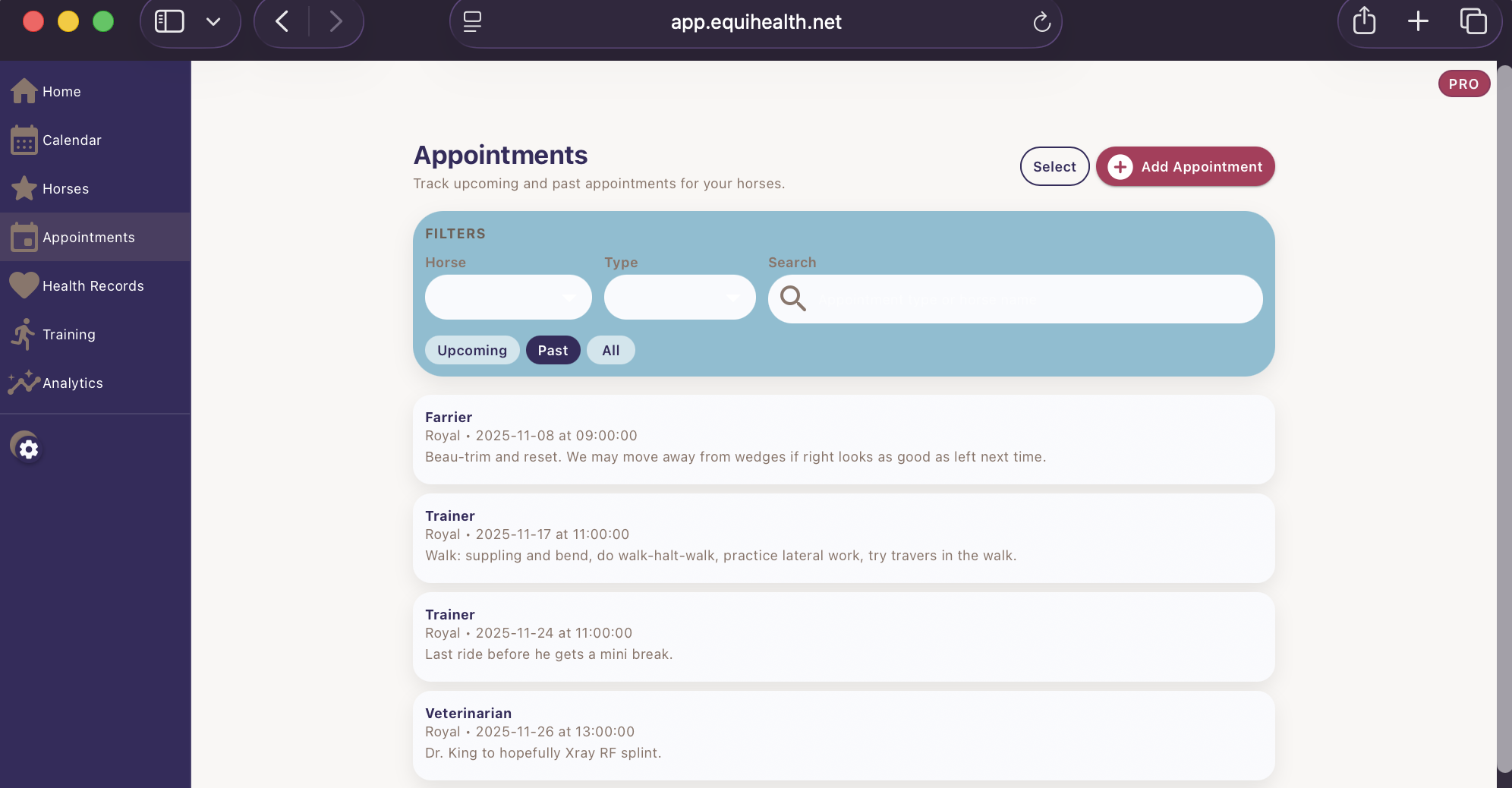
Add appointments to your horse’s calendar
I recommend starting with the basics: after adding your first horse to the app, start adding your horse’s past and upcoming appointments. The more data you can add, the better it will be for tracking trends and seeing patterns emerge. The appointments will be added to your calendar page and allow you to see what you can plan for and what data to gather to get the most value from those appointments. For example, if you have the vet coming in three weeks, you can begin to add more detailed health tracking to the App so that you can report on trends to your vet.
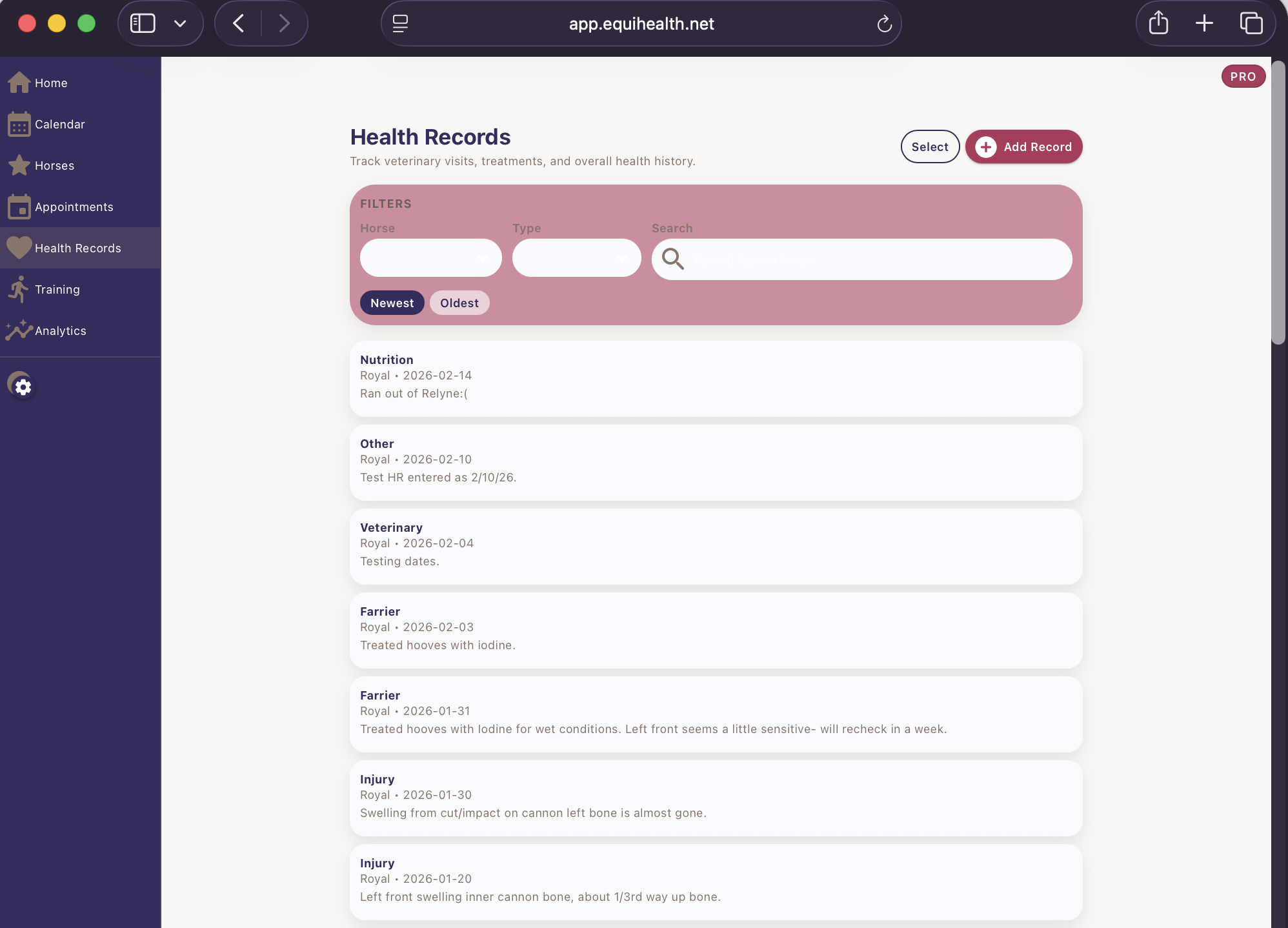
Add health records for your horse
The next step is adding your horse’s health records. For each health record, you will be able to select from a list of common types such as vet, farrier, massage/body work, etc., add a detailed description, and a health rating. Health ratings are on a scale of 1-5. I chose this scale as it likely matches what most equestrians think of when they think about their horse’s health: with 5 being “excellent” and 1 being “poor”. We hope to move our horses constantly towards a “5” or “excellent” health. Add as many health records as you can recall and add them on an ongoing basis. For example, if your horse nicked himself in the paddock and you want to document swelling, add the record on the first day you notice the issue and then for the few days after to track the progression. This allows you to track health issues in a calm and dispassionate manner and gives you the advantage of a history to look back on.
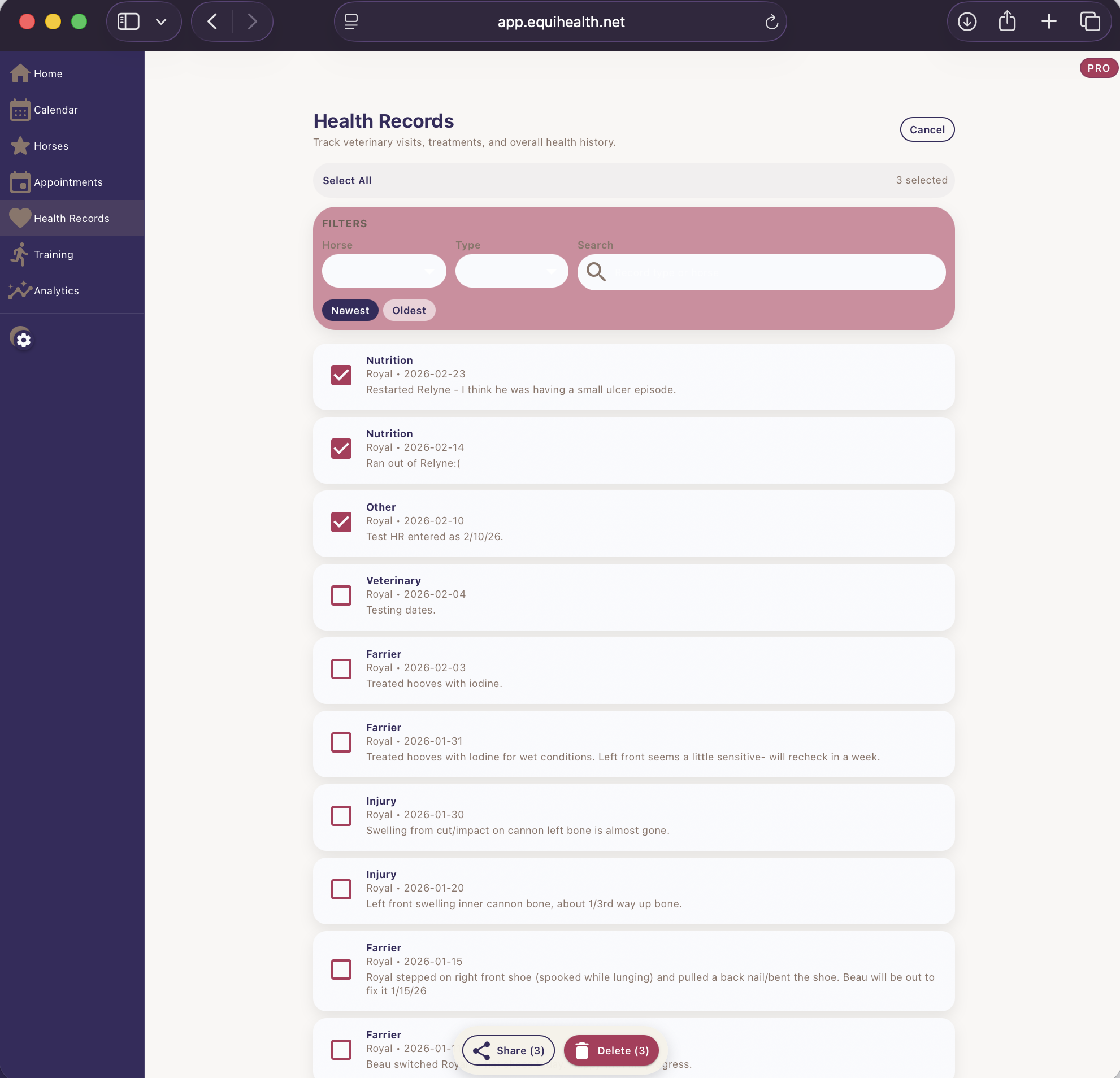
Select records to print or share with your vet or other equine professional.
The final component to add is your training sessions. I recommend recording data about every training session or competition to add a rich amount of history to your database. When adding a new session, you will be able to select from a variety of types of training, such as flatwork, jumping, dressage, hack, competition, ground work, etc. You will also have the option to add a longer description of the session and a session rating. Again, the rating scale ranges from 1 - 5 with 5 being “excellent” and 1 being “poor”. Use your gut feel for these - don’t overthink the rating and don’t feel that you need it to be “perfect” to score a 5. Think of this rating scale as a running commentary on how things are going, not a judgement of you or your horse’s worth.
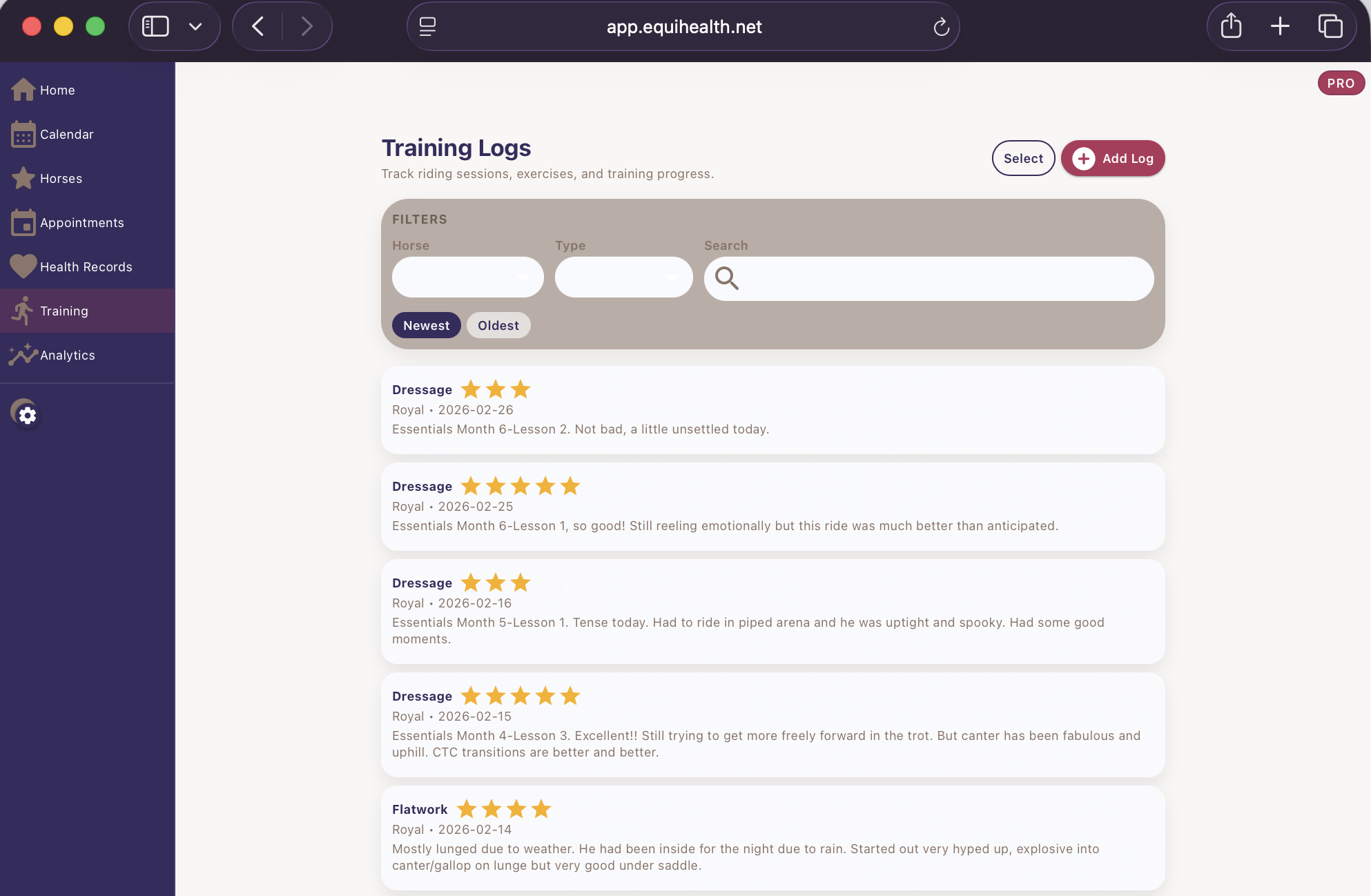
Record data about each of your training sessions to get a full picture of how things are going.
Adding all of your data culminates in having a big picture view of how things are going. If you’re subscribed to the PRO account, you will have the “Advanced Analytics” page to view trends in graphical format. This is a great page to share with your vet, farrier, body worker, etc. for a more objective view of what’s happening with your horse. This allows you to see trends over time, match up how training and health are progressing together, and see which training sessions are generally easier/smoother or more effective for your horse.
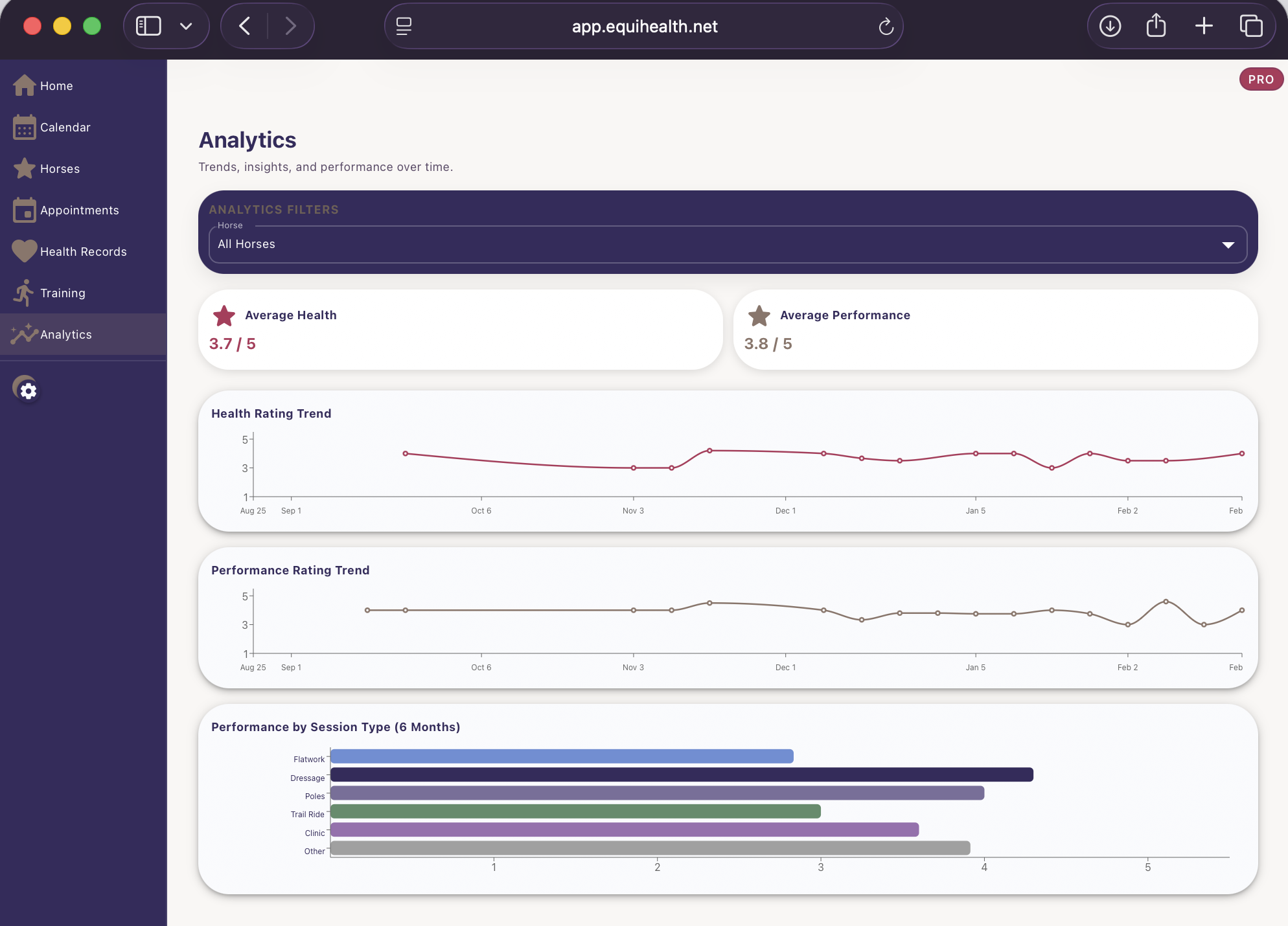
The Advanced Analytics page - available with a PRO account.
EquiHealth is designed to help you assess your progress and achieve your goals with less confusion and more direction. While it may not speed up the process of getting to your goals, it will help you track what works well, what can be omitted in future training cycles, and how to keep your horse performing at his or her best. An additional (big) advantage is having the ability to quickly and easily share health records and training sessions with equine professionals so they can help you make informed, data-driven decisions. By combining EVIDENCE with INTUITION, you are taking advantage of your horsemanship skills to lead you in making the most appropriate decisions for your horse’s wellbeing. I wish you much joy and happiness in your journey with your horse and hope that EquiHealth assists you in making the most of every day with your equine partner.
