Why Focus on the Process?
Stuck in a cycle of pressure, judgement, and emotional dysregulation? Let’s talk about it!
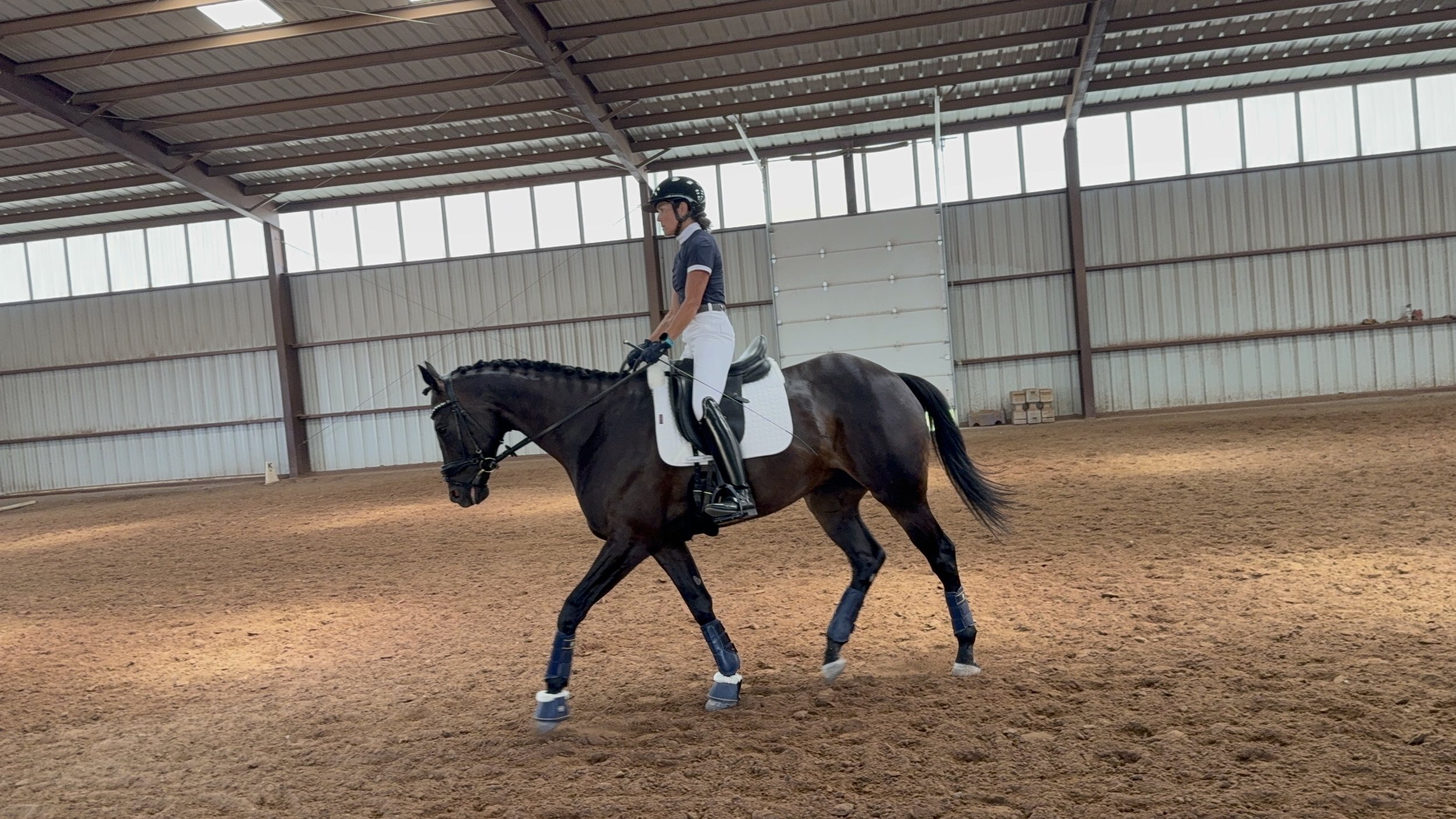
My Mr. Good Boy at our local schooling show🥰
I recently competed in a local dressage schooling show and came away with some interesting insights. While my scores were acceptable, the judge called me over after my second test to give me some verbal feedback. It was uncomplimentary. I was initially a bit shocked and disappointed to hear what she had to say.
Fortunately, my wonderful husband had come to watch my show and filmed both classes. That gave me the lucky opportunity to watch my tests and see exactly what the judge had picked up on in my riding. Also fortunately, I have wonderful friends and mentors who can be honest and give me constructive feedback; both to reassure me that I was not riding poorly, and to point out what the judge might have been seeing that I could improve upon. Long story short, there were some great positive takeaways from the show and some opportunities to improve myself and my riding.
This experience helped me reflect on a concept that I taught many of my athletes in my sport psychology practice: YOU HAVE TO LOVE THE PROCESS. If your focus is on winning, results, medals, outcomes, a “look”, an “image”, or some other momentary state, it is very likely you are experiencing a lot of disappointment in sport. Although good results are motivating to aim for, focusing on them as your primary goal in sport is not a recipe for long term success or enjoyment. When you focus on the results or outcomes of your sport, you are placing an expectation on yourself that sets you up for a win/lose proposition. If you meet your expectation, you win, if you don’t meet your expectation, you lose. Athletes who place expectations on themselves often experience more pressure, more nerves, less enjoyment, and less perseverance than those who focus on the process to get to their goals.
What does it mean to FOCUS ON THE PROCESS? It means loving the hard work that it takes to make tiny improvements, it means setting process goals instead of outcome goals, and it means being a problem solver. I tell my athletes to work backwards from their BIG goal and write out the process they would need to follow to make that dream a reality. Let’s talk through an example:
BIG GOAL: Qualify for Nationals
PROCESS: Map out the work you need to do for the 6 (or more) months leading into your show. Example follows:
Month 1: Ride 4-5 times per week, 2 of the days are in the arena and 2 of the days are fitness days. 1 Day is a hack day.
Month 2: Ride 4-5 times per week as above, add in 1 lesson day. Focus on suppling and strength work.
Month 3: As above, and add in to attend at least one clinic off property. Add one day a week of mental prep work, such as visualization.
Month 4: As above, attend at least one schooling show off property, start schooling the more advanced movements 2 days per week.
Month 5: As above, adding schooling segments of the test(s) on 2 days of the week, also adding longer sets to your fitness day(s).
Month 6: Sharpening test riding: 3 days of the week focusing on geometry, accuracy, and memorizing every piece of the test(s). Adding 3-5 “rehearsal” days where you ride the whole test(s) and make notes about what to improve for the next practice. As big show days approach, tapering your volume but maintaining intensity - short, sharp bursts of work to keep you and your horse fresh.
Having a clear idea of your process will help you focus on what really counts and what really moves the needle to improve your riding and your horse’s performance. Focusing on the outcome is of no benefit to you because it gives you no useful information. The best athletes in the world have honed their process with years of experience and feedback. That takes NO INNATE TALENT. Physical talent has no bearing on your process and the precision with which you execute it. So make the most of all the resources you have in your tool kit and love the process of improving yourself and your horse.
